
19 September, 2026
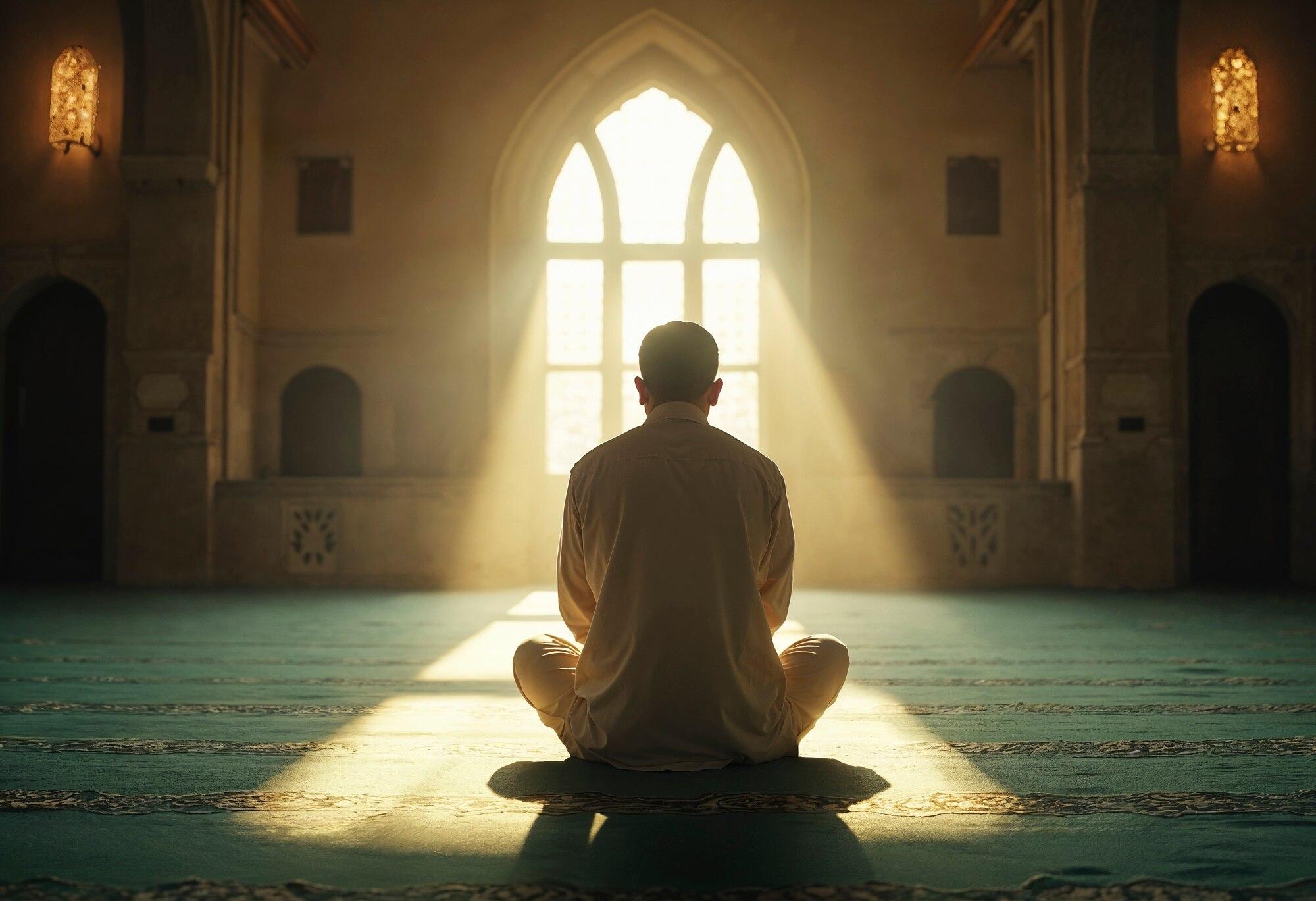
If you are not Muslim and want to understand how to pray in Islam, the Islamic prayer, known as Salah (Salat), is one of the most important acts of worship in Islam. Muslims pray directly to Allah, without an intermediary, and the prayer combines physical movements, Quranic recitation, remembrance of Allah, and personal devotion.
Learning how to pray Salah may seem difficult at first because it includes specific positions, Arabic recitations, and a particular sequence. However, the basic structure becomes much easier to understand and practice step by step.
Salah is the formal prayer Muslims perform at specific times throughout the day and night.
It is one of the Five Pillars of Islam and is considered a fundamental act of worship for Muslims.
During Salah, a Muslim:
-
Stands facing the Kaaba in Makkah
-
Recites verses and supplications
-
Bows before Allah
-
Prostrates before Allah
-
Sits and remembers Allah
-
Ends the prayer with a greeting of peace
The prayer is not simply a physical exercise. It is an opportunity for Muslims to remember Allah, express gratitude, seek forgiveness, and ask for guidance.
Before performing Salah, several conditions should be considered.
1. A Clean Place
Prayer should be performed in a clean place. Muslims can pray in a mosque, at home, at work, outdoors, or in another suitable clean location.
A prayer mat is commonly used, but it is not an absolute requirement if the place is clean.
2. Cleanliness
Muslims perform Wudu (ablution) before prayer when required.
Wudu involves washing specific parts of the body, including:
-
Hands
-
Mouth
-
Nose
-
Face
-
Arms
-
Head
-
Ears
-
Feet
The purpose of Wudu is both physical cleanliness and preparation for worship.
3. Appropriate Clothing
During Salah, Muslims should wear clothing that meets the Islamic requirements for covering the body.
For men and women, the specific requirements differ according to Islamic teachings.
4. Face the Qiblah
Muslims generally face the Kaaba in Makkah, known as the Qiblah, during Salah.
Modern Muslims can use a Qiblah direction app or a mosque's prayer direction to determine the appropriate direction.
5. Know the Prayer Time
Each obligatory prayer has its own time. A Muslim should perform the prayer within its prescribed time.
The following guide explains the basic sequence of a typical Muslim prayer.
Different Islamic schools may have minor differences in some details, but the fundamental structure remains recognizable.
Step 1: Make the Intention
Before beginning Salah, the person should know which prayer they are performing.
This intention is called Niyyah.
The intention does not necessarily have to be spoken aloud. It is an intention in the heart to perform a particular prayer for the sake of Allah.
For example, a person may intend to perform the obligatory Fajr prayer.
Step 2: Stand Facing the Qiblah
Stand upright while facing the direction of the Kaaba in Makkah.
Keep your feet in a comfortable position and prepare yourself mentally for prayer.
The prayer begins with the Takbir.
Step 3: Say "Allahu Akbar"
Raise your hands according to the established prayer practice and say:
Allahu Akbar
This means:
"Allah is the Greatest."
This phrase is called Takbiratul Ihram, and it marks the beginning of the formal prayer.
Step 4: Recite the Opening of the Prayer
The opening supplication may be recited before beginning the Quranic recitation.
The worshipper then recites Surah Al-Fatihah, the first chapter of the Quran.
Al-Fatihah contains praise of Allah and a request for guidance.
For someone learning How To Pray In Islam, memorizing Al-Fatihah is one of the most important early steps.
Step 5: Recite Another Portion of the Quran
After Al-Fatihah, the worshipper usually recites another Surah or portion of the Quran during the appropriate units of prayer.
A beginner may start with a short Surah such as Surah Al-Ikhlas.
The Quran is recited in Arabic during the formal prayer.
Step 6: Perform Ruku
After recitation, say:
Allahu Akbar
Then bow forward while keeping your back reasonably straight and place your hands on your knees.
This position is called Ruku.
While bowing, Muslims commonly glorify Allah by saying:
Subhana Rabbiyal Adheem
Meaning:
"Glory be to my Lord, the Most Great."
The exact number of repetitions can vary, although saying it three times is common.
Step 7: Rise From Ruku
Rise back to the standing position while saying:
Sami'Allahu liman hamidah
Meaning:
"Allah hears those who praise Him."
After standing upright, the worshipper says:
Rabbana wa lakal-hamd
Meaning:
"Our Lord, and to You belongs all praise."
Step 8: Perform Sujood
From standing, say:
Allahu Akbar
Then move into Sujood, or prostration.
During Sujood, the forehead and nose, hands, knees, and toes are placed on the ground.
This is one of the most recognizable positions in Muslim prayer.
A common supplication is:
Subhana Rabbiyal A'la
Meaning:
"Glory be to my Lord, the Most High."
Sujood represents humility and submission before Allah.
Step 9: Sit Between the Two Prostrations
Rise from Sujood and sit briefly.
A common supplication is:
Rabbighfir li
Meaning:
"My Lord, forgive me."
The worshipper then performs a second Sujood.
This completes one Rak'ah, or unit of prayer.
Step 10: Complete the Required Rak'ahs
The number of obligatory Rak'ahs depends on the prayer:
-
Fajr: 2 Rak'ahs
-
Dhuhr: 4 Rak'ahs
-
Asr: 4 Rak'ahs
-
Maghrib: 3 Rak'ahs
-
Isha: 4 Rak'ahs
The worshipper repeats the established sequence for each Rak'ah.
Step 11: Sit for Tashahhud
After the appropriate Rak'ahs, the worshipper sits and recites Tashahhud.
Tashahhud includes testimony of faith and greetings and blessings upon the Prophet Muhammad.
For someone beginning to learn How To Pray Salah, it may take time to memorize the complete Arabic wording.
Learning it gradually is perfectly reasonable.
Step 12: End the Prayer With Salam
The prayer is concluded by turning the head to the right and then to the left while saying:
Assalamu Alaikum wa Rahmatullah
This means:
"Peace and the mercy of Allah be upon you."
This marks the completion of Salah.
Someone who is completely new to Islamic prayer does not need to memorize everything in one day.
A practical learning order can be:
-
Understand what Salah means.
-
Learn the five daily prayers.
-
Learn how to perform Wudu.
-
Learn the basic prayer positions.
-
Memorize Allahu Akbar.
-
Learn Surah Al-Fatihah.
-
Learn the basic phrases used in Ruku and Sujood.
-
Learn Tashahhud.
-
Practice the complete sequence.
-
Gradually improve pronunciation and recitation.
This approach can make learning less overwhelming.
Common Mistakes Beginners Should Avoid
When learning how to pray in Islam, beginners may worry about making mistakes. Learning takes time, and practicing with a knowledgeable teacher can be extremely helpful.
Trying to Memorize Everything Immediately
There are several Arabic phrases and Surahs used during Salah. Trying to memorize all of them at once can make the learning process unnecessarily difficult.
Learn them gradually.
Focusing Only on the Movements
Salah is more than standing, bowing, and prostrating.
Understanding what the recitations mean can help a new learner appreciate the spiritual purpose of the prayer.
Ignoring Pronunciation
Because Quranic Arabic has specific pronunciation rules, beginners should gradually work on their pronunciation rather than rushing through the recitation.
Being Afraid of Making Mistakes
New learners naturally make mistakes.
The goal should be to learn correctly over time, ask knowledgeable teachers for guidance, and continue practicing.
There is no fixed amount of time required to learn Salah.
A person who already knows how to read Arabic may progress quickly, while someone completely unfamiliar with Arabic may need more time.
With regular practice, beginners can gradually learn:
-
Wudu
-
Prayer positions
-
Al-Fatihah
-
Short Surahs
-
Essential supplications
-
Tashahhud
-
The complete prayer sequence
Consistency is generally more useful than trying to learn everything in a single session.
Can a Non-Muslim Learn How To Pray In Islam?
Yes. Anyone interested in understanding Islamic worship can learn about the structure and meaning of Salah.
For a person exploring Islam, learning the prayer can also provide insight into how Muslims worship Allah and organize part of their daily lives around remembrance and devotion.
However, learning the physical steps of Salah and becoming Muslim are separate matters. A person can study Islamic prayer for educational purposes without being required to immediately make a religious commitment.
What Is the Difference Between Salah and Dua?
Salah refers to the formal ritual prayer performed at prescribed times with specific movements and recitations.
Dua means making a personal supplication or asking Allah for something.
Dua can be made at different times, including during and outside the formal prayer.
Understanding this distinction is useful for anyone beginning to study Islamic worship.
If you are learning How To Pray Salah, consider these practical tips:
Practice One Part at a Time
Instead of attempting to memorize the entire prayer immediately, focus on one section before moving to the next.
Learn the Meanings
Understanding the English meaning of the Arabic phrases can help you remember them and appreciate what you are saying.
Watch and Follow a Reliable Teacher
Visual demonstrations can make the physical movements easier to understand.
Practice Regularly
Short, regular practice sessions can be more manageable than occasional long sessions.
Ask Questions
If you are uncertain about Wudu, pronunciation, prayer positions, or the sequence of Salah, ask a qualified Islamic teacher.
Learn From Authentic Sources
Islamic prayer has been practiced by Muslims for generations. When learning, choose reliable Islamic educational resources and teachers who can explain the evidence and different scholarly practices clearly.
ITQAN Academy provides online Quran and Islamic education for students who want to develop their knowledge of Islam from home.
For beginners who are interested in learning about Salah, Quran reading, Tajweed, Islamic studies, and other aspects of Islamic education, structured lessons with a teacher can provide guidance throughout the learning process.
A teacher can help students understand both what to do during prayer and why Muslims perform these acts of worship.
What is the Muslim prayer called?
The formal Muslim prayer is called Salah, also commonly written as Salat.
How many times do Muslims pray each day?
Muslims perform five obligatory prayers each day: Fajr, Dhuhr, Asr, Maghrib, and Isha.
Can I learn how to pray in Islam as a beginner?
Yes. Beginners can learn Salah step by step, starting with Wudu, the basic prayer positions, Al-Fatihah, and the essential recitations.
Do I need to know Arabic to learn Salah?
You do not need to already know Arabic to begin learning. However, the formal prayer includes Quranic and Arabic recitations, so beginners gradually learn the required Arabic phrases.
What is the first Surah I should learn for prayer?
Surah Al-Fatihah is essential to learn because it is recited in the prayer.
How many Rak'ahs are in each obligatory prayer?
Fajr has 2 obligatory Rak'ahs, Dhuhr has 4, Asr has 4, Maghrib has 3, and Isha has 4.
Can non-Muslims learn about Salah?
Yes. Non-Muslims can study the Islamic prayer to understand Muslim worship, its movements, recitations, and spiritual meaning.
Where can I learn how to pray Salah correctly?
You can learn through reliable Islamic educational resources and qualified teachers. ITQAN Academy offers online Quran and Islamic education that can help students build their understanding and practice step by step.
