
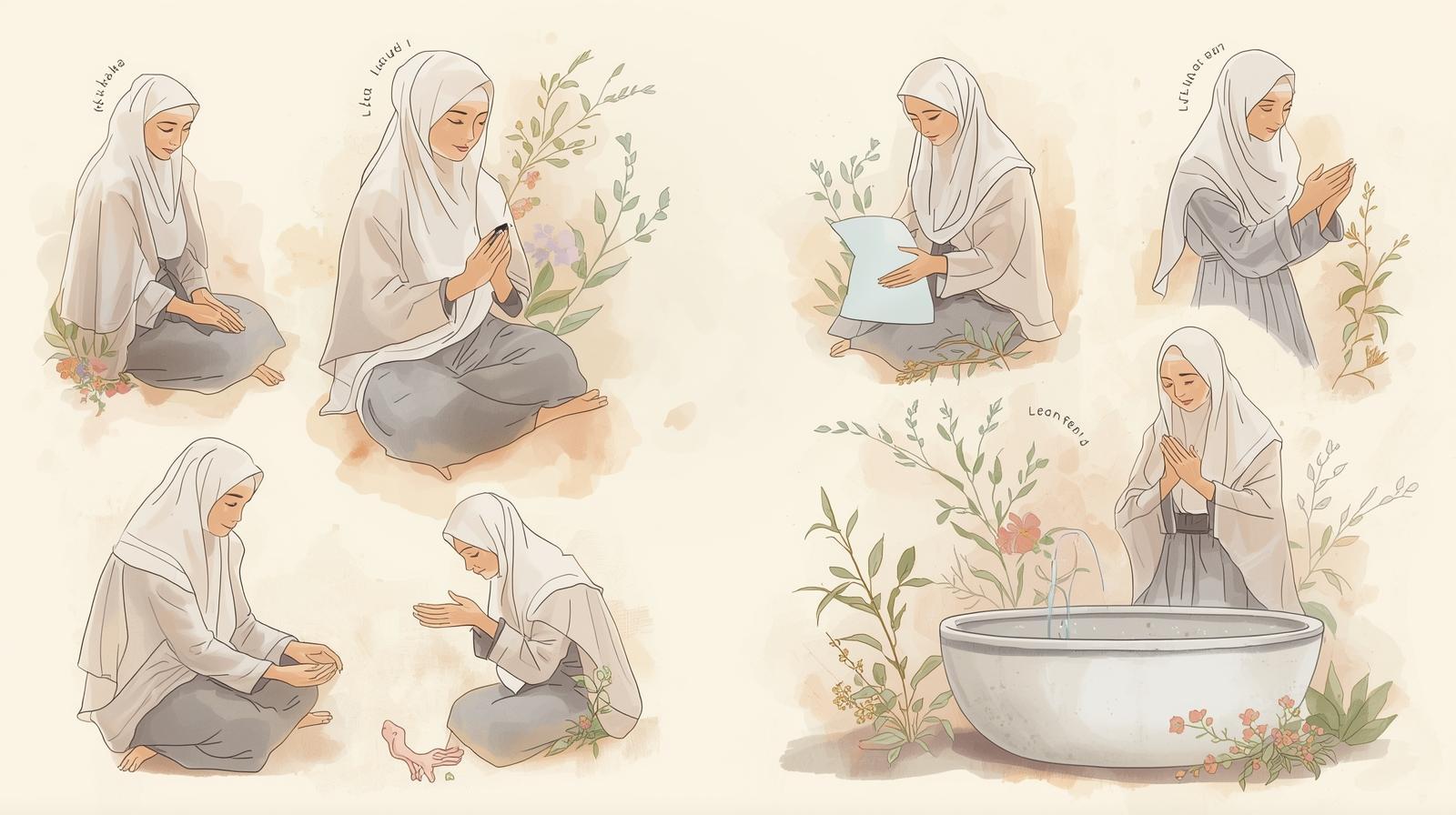
01 November, 2025
Maintaining purity is an essential part of a Muslim’s daily life, and for women, this aspect holds even greater significance due to natural physical cycles and the responsibilities they carry. Wudu for women is not just a physical cleansing but also a spiritual preparation for connecting with Allah through prayer and worship. This article provides a comprehensive guide on how to perform wudu for women, explains every step clearly, and addresses common questions Muslim women often have about wudu.
In Islam, cleanliness is half of faith. The Prophet Muhammad (peace be upon him) said:
“Purity is half of faith.” (Sahih Muslim)
For women, performing wudu (ablution) correctly ensures that their prayers, Quran recitations, and acts of worship are valid. Wudu is not just a ritual washing — it is a symbolic act that purifies both body and soul.
Women may experience more frequent interruptions to their acts of worship due to menstruation, postpartum bleeding, or daily household tasks, making the knowledge of proper wudu steps for women crucial for maintaining spiritual continuity and readiness for prayer.
Before we discuss how to perform wudu for women, it’s important to know the situations that require wudu. A woman needs to perform wudu in the following cases:
-
Before every obligatory or voluntary prayer (Salah)
-
Before touching or reciting the Quran (according to most scholars)
-
After using the restroom
-
After sleeping deeply
-
After fainting or losing consciousness
-
After passing wind
Additionally, women should renew their wudu if it becomes invalid due to any of the above conditions.
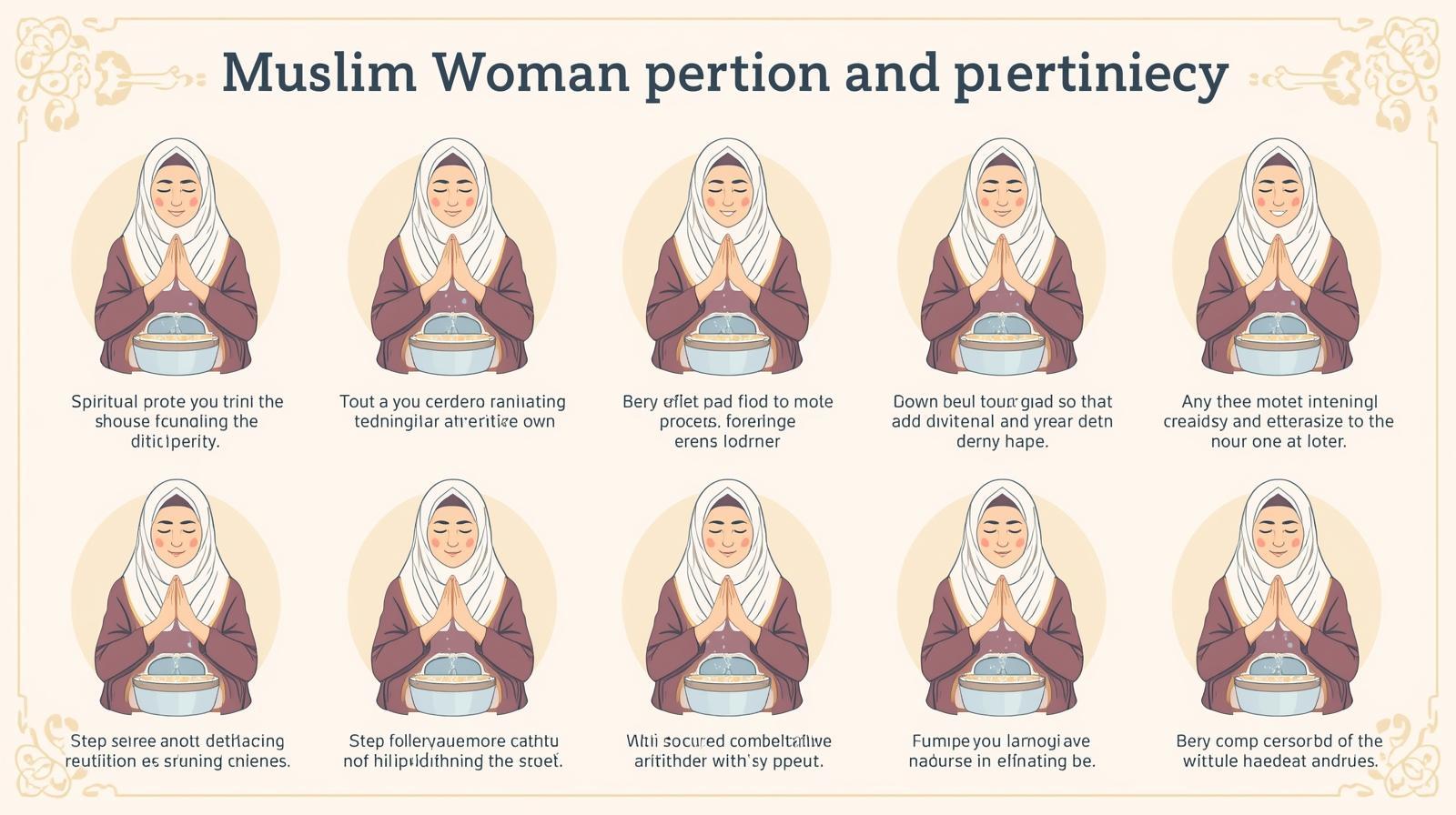
Beyond its physical aspect, wudu for women represents renewal, calmness, and mindfulness. As the water touches the skin, it is believed that sins are washed away, bringing a sense of peace. Each step has a spiritual symbolism — washing the face symbolizes clarity of vision, washing the hands means purifying actions, and washing the feet means walking towards what is right.
This spiritual understanding encourages Muslim women to approach wudu not as a mere obligation, but as a moment of inner reflection and connection to Allah.
Now let’s look in detail at how to perform wudu for women correctly according to the Sunnah of the Prophet (peace be upon him).
1. Make the Intention (Niyyah)
Before starting, a woman should make the intention in her heart that she is performing wudu for the sake of Allah, to purify herself for prayer. No verbal statement is required — the intention resides in the heart.
2. Say “Bismillah”
Begin wudu by saying “Bismillah” (In the name of Allah).
3. Wash the Hands
Wash both hands up to the wrists three times, making sure that water reaches between the fingers. This prepares the hands for the next steps.
4. Rinse the Mouth
Take water into the mouth using the right hand and rinse thoroughly three times. This step cleanses the mouth and prepares it for recitation of Quran and dhikr.
5. Clean the Nose
Gently inhale water into the nostrils and blow it out three times. This removes impurities and symbolizes the purification of breathing.
6. Wash the Face
Wash the entire face three times, from the hairline to the chin and from ear to ear. Women should be careful to ensure that no part of the face remains dry. If a woman is wearing makeup, it should be removed beforehand because makeup can prevent water from reaching the skin.
7. Wash the Arms
Wash the right arm up to and including the elbows three times, then the left arm three times. Make sure water reaches under rings or bracelets if worn.
8. Wipe the Head
Using wet hands, wipe over the head once — from the front hairline to the back and back to the front again. For women with long hair, it is enough to wipe over the top of the head without wetting the entire length of the hair.
9. Wipe the Ears
With the same wet hands, clean the inside and outside of both ears once. Use your index fingers for the inner ear and thumbs for the outer ear.
10. Wash the Feet
Finally, wash both feet up to and including the ankles three times, starting with the right foot. Ensure that water reaches between the toes. If a woman is wearing nail polish, it must be removed before wudu, as it prevents water from reaching the nails.
One of the most common concerns is whether makeup or nail polish affects wudu. Anything that creates a barrier preventing water from touching the skin — such as nail polish, thick foundation, or waterproof mascara — invalidates wudu. Therefore, it’s recommended to remove such products before performing wudu.
Hair and Hijab
Women do not need to remove their hijab completely while making wudu in public or at work. It is sufficient to wipe over the front part of the hair beneath the scarf if the full head cannot be reached, though it is better to perform complete wiping when possible.
Privacy and Comfort
Islam encourages modesty. If a woman needs to perform wudu outside the home (e.g., at work or school), she should look for private spaces to do so comfortably. Carrying a small wudu bottle or spray can also be helpful.
For easy reference, here is a short summary of the wudu steps for women:
-
Make the intention (niyyah).
-
Say “Bismillah.”
-
Wash hands three times.
-
Rinse mouth three times.
-
Clean nose three times.
-
Wash face three times.
-
Wash arms up to elbows three times.
-
Wipe head once.
-
Wipe ears once.
-
Wash feet up to ankles three times.
These steps are simple but hold deep meaning — each action symbolizes purification of a specific part of the body and soul.
Regular wudu has both spiritual and health benefits. It refreshes the body, improves blood circulation, and promotes mindfulness before prayer. Spiritually, it helps women feel ready for worship and aware of their connection with Allah.
The Prophet (peace be upon him) said:
“When a Muslim washes his face, every sin he contemplated with his eyes will be washed away with the water... until he emerges pure from sin.” (Sahih Muslim)
This hadith emphasizes that wudu is not only about physical cleanliness — it’s a path to forgiveness and renewal.
While performing wudu, women sometimes make small mistakes that can invalidate it. Here are some examples to avoid:
-
Forgetting to wash parts of the face or arms completely.
-
Keeping nail polish or makeup that blocks water.
-
Talking or being distracted during wudu.
-
Performing wudu too quickly without mindfulness.
-
Not following the correct order of steps.
Awareness of these mistakes helps ensure that wudu remains valid and meaningful.
Q1: Can I perform wudu while wearing makeup?
A1: You can only perform wudu if the makeup does not create a barrier to water. If your makeup is waterproof or thick, it must be removed before wudu.
Q2: Do I need to redo wudu if I touch my husband or children?
A2: Touching someone does not invalidate wudu unless there is discharge or one of the nullifying acts occurs, such as using the restroom or sleeping deeply.
Q3: How long does wudu last?
A3: Wudu remains valid until it is broken by one of the nullifying actions — such as urinating, passing wind, or sleeping heavily.
Q4: Can I wipe over my socks instead of washing my feet?
A4: Yes, if you have performed full wudu before putting on clean socks and they cover the ankles, you can wipe over them within 24 hours for convenience.
Q5: Is wudu different for men and women?
A5: The steps of wudu are the same for both. However, women should be mindful of makeup, hair, and modesty while performing wudu.
