

08 November, 2025
Discover the rights of children in Islam, from love and care to education and justice. Learn how Islam protects every child’s dignity and well-being.
Children hold a special place in Islam. They are considered blessings and responsibilities entrusted to parents and society. The rights of children in Islam are not limited to physical care — they include emotional, spiritual, and educational nurturing. Islam sets a comprehensive framework to ensure every child grows up with dignity, fairness, and love.
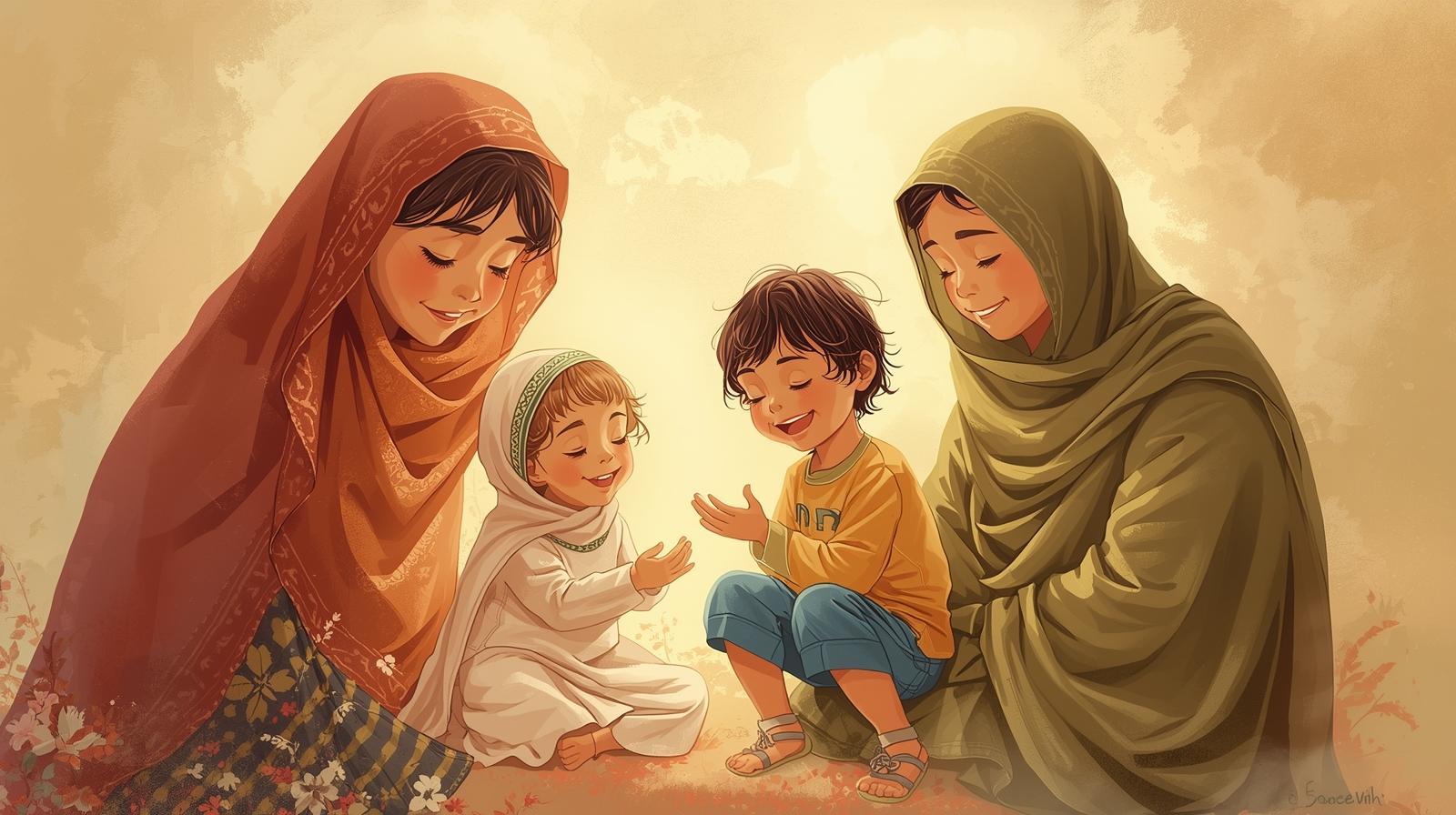
In Islam, children are viewed as a trust from Allah. Their presence brings joy, mercy, and blessings to the family. The Prophet Muhammad ﷺ said:
“He is not one of us who does not show mercy to our young ones.”
This hadith highlights the deep compassion Islam encourages towards children, making kindness and care a moral and religious duty.
Islamic teachings emphasize several core rights that every child must receive from parents and society. These rights ensure that children grow up in an environment of love, safety, and fairness.
1. The Right to Life and Protection
The very first right of a child begins before birth. Islam strictly prohibits infanticide, abortion without valid reason, and any harm to a child’s well-being.
The Quran says: “Do not kill your children for fear of poverty; We provide for them and for you.” (Qur’an 6:151)
Every child has the right to life, safety, and protection from physical or emotional abuse.
2. The Right to a Legitimate Identity
Islam preserves a child’s lineage and name. Every child has the right to know and be connected to their parents. It is forbidden to deny or change the child’s paternity. This ensures a stable identity and a sense of belonging within the family and community.
3. The Right to Love and Compassion
Love is the foundation of a healthy upbringing. The Prophet ﷺ was known for his kindness toward children — kissing, hugging, and playing with them. He said:
“Whoever does not show mercy to children is not one of us.”
Emotional security is one of the most essential rights of children in Islam, fostering confidence, kindness, and strong character.
4. The Right to Breastfeeding and Care
The Quran recognizes a child’s need for proper nutrition and emotional bonding:
“Mothers shall breastfeed their children for two whole years, for those who wish to complete the term.” (Qur’an 2:233)
This emphasizes a child’s right to nourishment and maternal affection, ensuring both physical and emotional development in early years.
5. The Right to a Good Name
Choosing a good name for the child is an act of respect and dignity. The Prophet ﷺ encouraged parents to give meaningful names with positive connotations, reflecting the child’s identity and values.
6. The Right to Education and Upbringing
Education is among the greatest rights of children in Islam. Parents must teach their children about faith, manners, and knowledge.
The Prophet ﷺ said: “Seeking knowledge is an obligation upon every Muslim.”
Islam promotes both religious and worldly education, emphasizing moral values, good behavior, and useful skills.
7. The Right to Fair Treatment
Islam commands parents to treat all their children equally — whether male or female.
The Prophet ﷺ said: “Fear Allah and be just to your children.”
Favoritism in gifts, affection, or attention is discouraged, as it causes jealousy and emotional harm.
8. The Right to Play and Joy
Play is part of childhood, and Islam acknowledges its importance. Children were seen playing freely during the Prophet’s time, and he never scolded them for it. Play strengthens physical health, creativity, and happiness — essential for balanced growth.
9. The Right to Inheritance
According to Islamic law, children — both sons and daughters — are entitled to their share of inheritance after their parents’ death. This right ensures justice and financial security.
| Relationship | Inheritance Share |
|---|---|
| Son | Double the share of a daughter (as financial responsibility lies on men) |
| Daughter | Half of the son’s share |
| Parents | Receive shares depending on surviving heirs |
Islam’s inheritance laws are designed to maintain balance, fairness, and protection for all family members.
10. The Right to Guidance and Moral Development
Every child has the right to spiritual and ethical guidance. Parents are responsible for teaching their children prayer, honesty, kindness, and respect.
The Prophet ﷺ said: “Each of you is a shepherd, and each of you is responsible for his flock.”
This ensures the next generation grows with strong morals and faith.
11. The Right to Freedom from Harm and Exploitation
Islam prohibits child labor, abuse, and neglect. Children must not be forced into situations that harm their health, dignity, or education. The Prophet ﷺ’s teachings highlight mercy and care, not control or exploitation.
12. The Right to Choose Marriage When Mature
Islamic teachings also recognize the child’s right, upon reaching maturity, to consent freely to marriage. No one — including parents — can force marriage without their approval. Consent is a fundamental aspect of dignity and justice in Islam.
Islam places great emphasis on parental responsibility. Raising children with love and faith is considered an act of worship. Parents are reminded in the Quran:
“O you who believe, protect yourselves and your families from a Fire whose fuel is people and stones.” (Qur’an 66:6)
This verse shows that guiding children spiritually and morally is part of every parent’s duty.
Beyond parents, society and the state also share responsibility in protecting children. Islamic governance throughout history supported orphanages, education, and community care. The Prophet ﷺ himself was an orphan, and Islam made orphan care one of the greatest good deeds.
The Quran strongly encourages caring for orphans:
“They ask you about orphans. Say: Improvement for them is best.” (Qur’an 2:220)
Feeding, clothing, educating, and showing affection to orphans is a direct path to Allah’s reward.
| Right | Description |
|---|---|
| Life and Protection | No harm or neglect is allowed |
| Love and Compassion | Emotional care and affection are essential |
| Education | Religious and worldly learning is mandatory |
| Equality | No discrimination between sons and daughters |
| Identity and Lineage | Every child must know their parents |
| Inheritance | Financial rights are guaranteed |
| Guidance | Parents must teach moral and spiritual values |
Can children choose their own religion in Islam?
Children are raised as Muslims, but Islam prohibits forcing belief when they reach maturity — faith must come with conviction.
Are boys and girls treated equally in Islam?
Yes. Both have equal spiritual value, though certain roles differ due to responsibilities and nature.
What happens if parents fail to give children their rights?
They are accountable before Allah for neglecting their duties.
Does Islam protect orphan children?
Absolutely. Caring for orphans is one of the most rewarded acts in Islam.
